
Lakeshore Arms and the City’s False Choice
By: Amy Thomas, Rethos Director of Real Estate and Minneapolis Heritage Preservation Commissioner

On July 16, The Minneapolis City Council chose to deny local landmark designation for Lakeshore Arms, a small multi-family apartment building located at 3026 W Lake Street. The nomination for Lakeshore Arms went through the City’s preservation process. Staff studied it; The Heritage Preservation Commission reviewed it; many people in the public spoke out in support; and the record ultimately supported designation. But when the matter reached the Council, they chose to deny designation “notwithstanding the recommendation of the Heritage Preservation Commission.”
The vote was not unanimous. Council Members Wonsley, Chavez, and Chowdhury voted against denying designation, underscoring that this was not an obvious or uncontested decision.
Council has the authority to do that. But it is worth asking what kind of message that sends.

If Minneapolis is going to ask preservation staff and appointed commissioners to spend time reviewing historic criteria, building a public record, and making expert recommendations, then those recommendations should carry real weight. If the Council is going to reject this work, it should be done with equally rigorous research.
Council concluded there was “insufficient evidence” of Spanish Eclectic significance, even though city planning documents described the building as well-preserved and retaining significant original architectural features. And rather than focusing squarely on whether Lakeshore Arms met the designation criteria, Council leaned into a comparative “not special enough” rationale.
The most troubling part of the Lakeshore Arms debate with the Council is how quickly preservation was framed as being in conflict with housing. That framing may be politically convenient, but here it was deeply misleading. Lakeshore Arms is not vacant land. It is already housing.
The building contains 17 apartments on a small, irregular parcel near Bde Maka Ska. This is not a large empty site where landmark designation would clearly block a major housing opportunity. It is an existing multifamily building doing exactly what Minneapolis says it needs more of: providing homes.
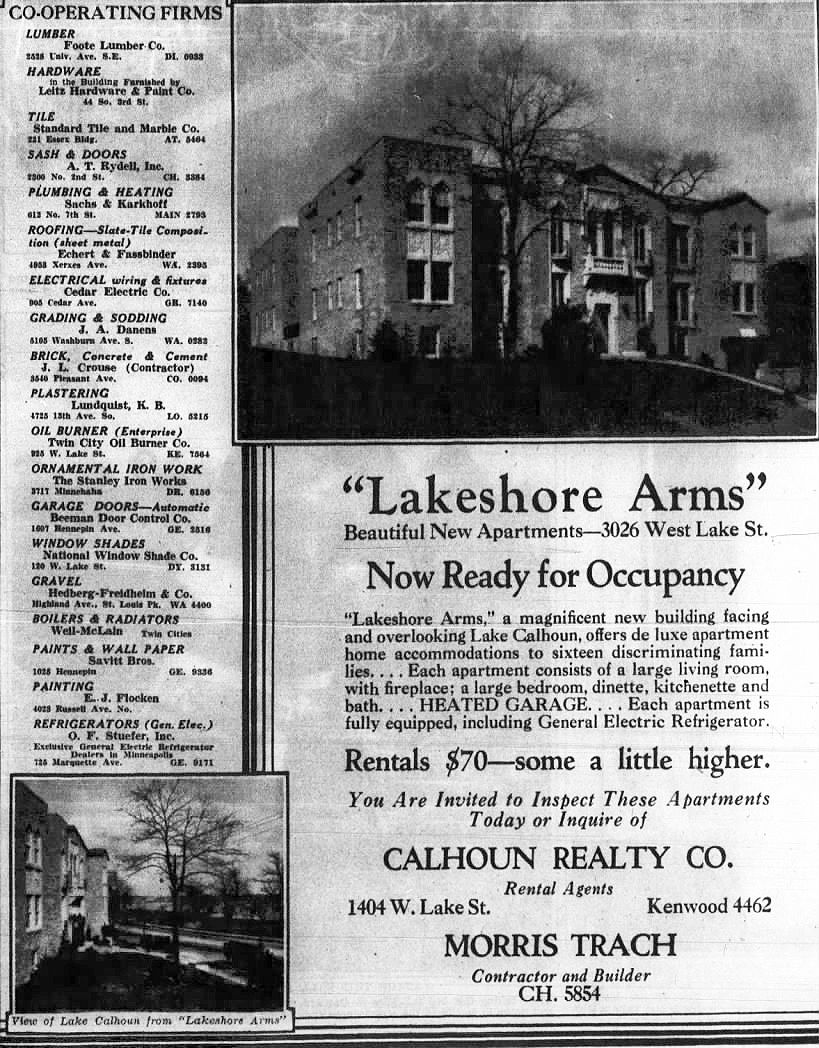
Older apartment buildings like Lakeshore Arms are often part of the city’s naturally occurring affordable housing supply. Because these buildings are older and smaller in scale, they often provide comparatively attainable rents without direct public subsidy. When buildings like this are demolished and replaced with expensive new construction, the city is not advancing affordability; they are, instead, converting existing affordability into speculative density.
This is where the Council’s use of Minneapolis 2040 deserves scrutiny. The plan supports additional housing, greater density, and growth near transit. But it also recognizes historic resources as citywide assets that should be protected. These goals are not mutually exclusive. Minneapolis can support housing growth while also preserving meaningful buildings, particularly when those buildings already provide housing.
Most of the arguments Councilmember Shaffer used to support denial, actually point in the opposite direction. Lakeshore Arms remains in an area where much of the surrounding context has already changed. When everything else along this stretch of West Lake Street has been largely redeveloped, the remaining historic fabric carries more weight, not less. Lakeshore Arms is one of the few remaining historic buildings that still shows how this area developed as an early multifamily residential corridor.
The broader concern is that the Lakeshore Arms vote placed hypothetical future development ahead of documented historic value and existing housing. There was no active redevelopment proposal before the Council, no guaranteed affordable housing replacement, and no specific public benefit tied to denying the designation. The decision came down to preserving the possibility that a larger project could one day be built there. It effectively prioritized the owner’s future resale value over the people already housed by the building and public value identified through the City’s own preservation process.
Minneapolis can support growth while still preserving meaningful historic buildings. It can pursue additional housing without treating every older building as an obstacle. It can also respect the work of preservation staff and appointed commissions.
That balance requires Council to treat preservation as one of the City’s planning values. Lakeshore Arms is already providing housing, contributing to the city’s architectural history, and adding character and affordability. The Council chose not to protect it, and in doing so, sent a clear message: future redevelopment potential carries more weight than existing housing, historic value, and public process.


